It's spring, sort of, which of course is the only way a Midwestern spring ever comes. Also Midwestern is how it felt like spring before the blizzard, in that it was too warm and smelled weird and everything was brown and I couldn't stop thinking about death. "In like a lion, out like a lamb" is what Kate said about the weather (not the psychological issues), and while she's not precisely wrong, I do think Midwesterners on average underrate the extent to which March just isn't like this for most of the country, or even the hemisphere.
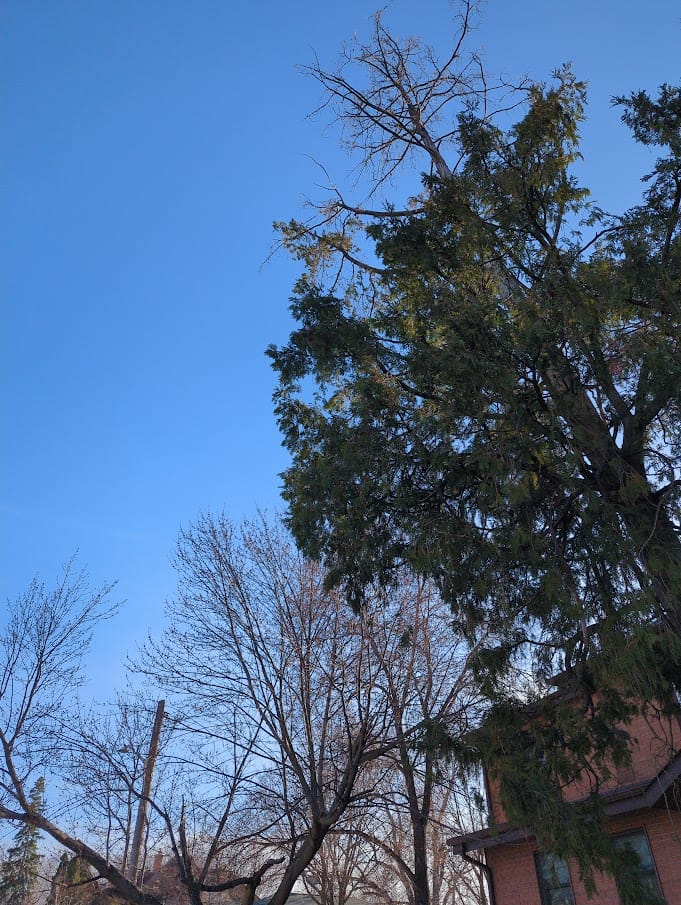
I always, always think of the end of the world this time of year. I can launder it through enough religosity that it almost sounds normal: after all, it's Lent. Jesus is fixing to die as we speak. Jesus is telling anyone who will listen how badly he doesn't want to die, or he will be next week. It's normal to feel weird about life and death, it's almost Easter! But my feelings are very earthly. I am concerned about climate change. I am afraid for the bees, and the birds, and the trees and bugs that feed them. This is the time of year when the world begins waking up, and you realize a pine on the corner of 37th and Grand is dying, or that the bushes by the old folks home are brown in a way they can't recover from. It's the time of year you catalogue what the winter stole from you and what was left in its place: trash, mostly. Big piles of dirt. Salt that kills whatever survived the cold, too.
Spring will come whether I want it to or not. The earth will warm whether the tree roots sunk into it are living or dead. I try to remind myself that climate change doesn't give a fuck whether I'm a busybody about it or not, in fact it's not sentient at all. I try to remember that birch and pine die off in the best of circumstances, and I'm not exactly an arborist. It is normal, profoundly normal, for things to die, and common for them to fail to thrive. Mostly this doesn't work, though, because I am a busybody, and I know damn good and well that only some of these die-offs can be considered normal. Some of these trees we can't afford to lose.
I haven't started my summer seedlings yet. The school near us has a plant sale fundraiser, so I might buy some pepper and tomato starts from them. I am going to try and coax some more tomatoes to life in the basement, though, a nice quick three-week start before I plant them outside. Last year and the year before they got rootbound, and I felt like a murderer, and then they thrived outside. It'll be fine, probably. The elm tree in the back will be fine too, probably. I saw a squirrel eating buds off a tall branch yesterday.
Tyler Anbinder chronicles 19th-century NYC slum life in Five Points, and in an early chapter he talks about life in Ireland—the famine, of course, but also the flat-out miserable life the tenant farmers lived before the famine. I didn't know that the peasants' reliance on potatoes was so severe that they often went hungry in July and August, that they had a name for the period of time when last year's potatoes finally went too bad to eat and the new ones weren't ready yet. It is a striking mental image to me, almost more grotesque than the details of the famine itself because of how routine it sounds: knowing, every year, that the Earth's own merciless schedule means you will go hungry. Not knowing precisely when your hunger would start or end, unsure of what would be left of and for you at the end of it. I feel nothing like that when I watch what comes back to life here: a dead birch won't kill me and neither will a summer too dry or cold for my tomatoes to really thrive. But I do find myself wondering at the rhythm of it: what we live through, what we bear, what we don't. What our own descendants will think of us.
Today we walked past one of those newfangled (to me) giant polyester bags that trash services have you fill and haul away. Weekend warrior contractors love them. This one was filled to bursting with a kitchen's corpse: moldy plywood ex-cabinets, rusty nails driven through toe kick trim, that kind of thing. It was sitting outside a quiet duplex with nothing personal in the yard or the windows. My first thought was that I hoped whatever normally lived on this strip of median would survive the construction, because when we had our roof redone we had an ash tree that didn't survive the shit they leaned against its trunk. My second thought was that I hoped the duplex was empty in an honest way, no court date required.
You get where I'm going with this, right?